
Logbook 002, Schooner's Spring
Schooner Kathrina's Spring Maintenance – Upkeep and Preparations for a Traditional Sailing Ship
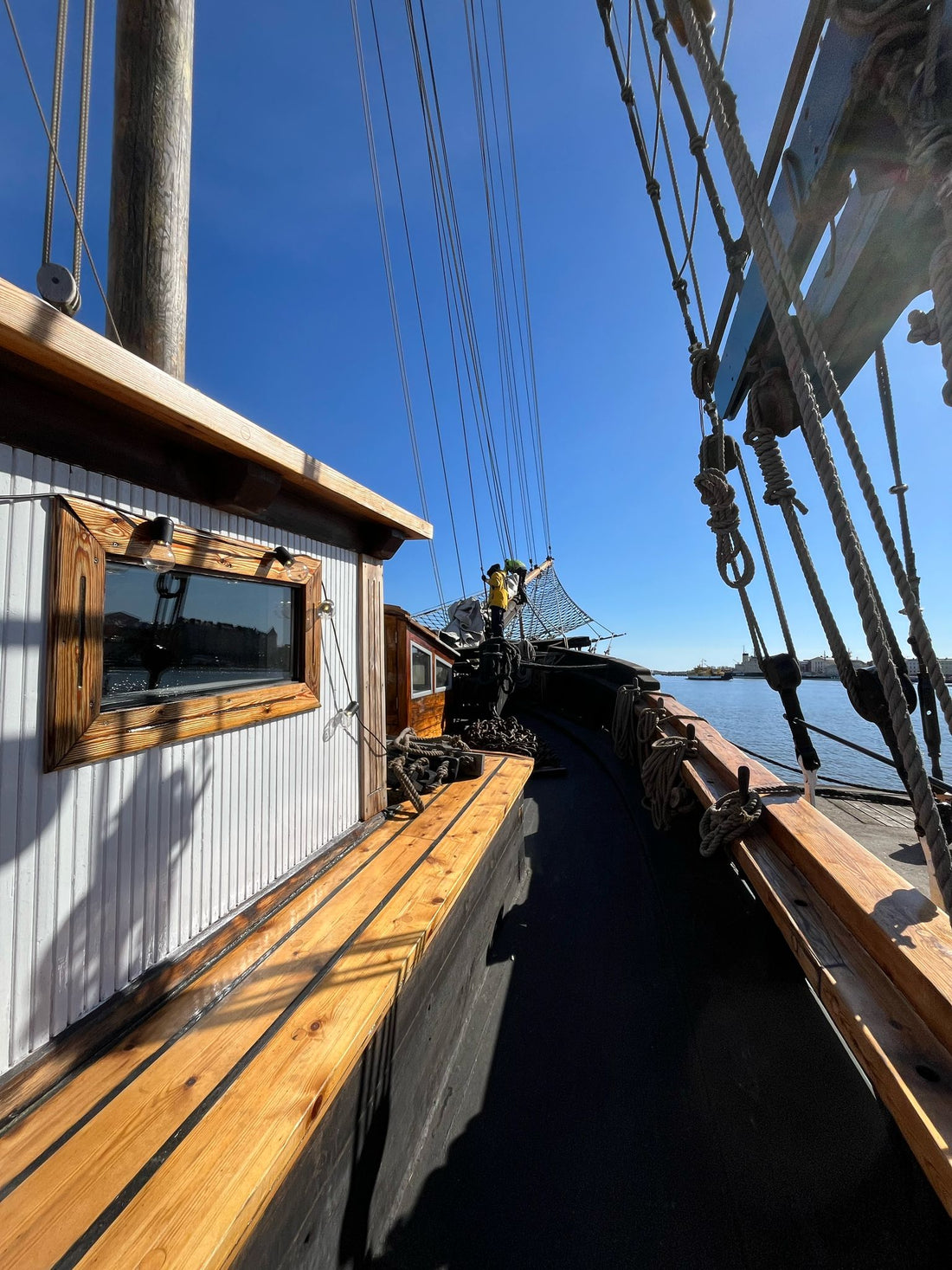
Spring is a busy time for Kathrina's crew, as the season only begins after the ship has been maintained. Kathrina's spring maintenance is more than just painting a house – it's a tribute to traditional shipbuilding, using carefully selected natural materials and the best of Finnish craftsmanship.
Sanding and Restoration of Varnished Surfaces
The initial phase of spring maintenance focuses on sanding varnished surfaces. This ensures that the ship's wooden structures remain durable and beautiful throughout the season. After sanding, the surfaces are treated with Owatrol D1 and D2 varnishes, which protect the wood and bring out its natural color and beauty.
Deck Impregnation and Caulking
Kathrina's deck is constantly exposed to weather conditions, so it is impregnated with Finnish tar and linseed oil. This natural mixture penetrates deep into the wood, protecting it from moisture and the effects of the sun. Deck caulking, or sealing the seams, ensures watertightness and extends the lifespan of the structures.
Protection and Painting of Interior Spaces
The interior spaces also receive attention: surfaces are impregnated, and floors and other surfaces are painted. The entire exterior of the ship is painted with breathable and ecological Virtanen natural paints, which are thinned in the traditional way with pine turpentine.
Engine and Generator Maintenance
Although Kathrina sails under wind power about 80% of the time, the engine is an important aid for harbor maneuvers and in windless conditions. During spring maintenance, the engine room receives a full service:
– The Detroit Diesel V71 engine undergoes oil and filter changes, clutch oils are checked, and necessary adjustments are made to the inverters.
– The generator receives similar maintenance: oil change, fuel filter replacement, and test runs to ensure reliability.
This ensures that the technical equipment is also reliable and safe throughout the season.
Maintenance Respecting Traditions
All products used in Kathrina's maintenance are carefully selected – respecting traditions and ecological principles. Virtanen paints, pine turpentine, Finnish tar, and linseed oil together form a material base that supports sustainable and valuable sailing ship culture.
Maintenance and upkeep of traditional sailing ships is continuous work, but every hour spent is an investment in the future. Kathrina remains in good condition only through continuous care – every piece of work done extends its long and valuable story.
Kathrina's Spring Work – Sails in Place and Rigging Check
Once the spring maintenance is complete, it's time to install the sails and check the rigging. Kathrina has a total of ten sails – three main sails, two topsails, and five headsails – totaling over 800 square meters of sail area. This ensures an impressive sight at sea and sufficient area for sailing.
Sail Installation – Tarred Ropes, Lines, and Hanks
The sails are attached carefully and with respect for tradition: tarred rope and modern lines are used. Headsails, such as the jib and jibs, are attached with hanks, which allow for smooth operation during sailing. Shackles are used for fastenings, ensuring durability even in strong winds.
Rigging Inspection and Maintenance
Spring maintenance of the rigging is crucial for safety. Masts, shrouds, standing rigging, and other fastenings are thoroughly inspected – worn parts are replaced, knots are tightened, and necessary adjustments are made. This ensures that Kathrina is ready to safely face sea conditions.
Craftsmanship and Tradition – For the Future
Maintenance of sails and rigging is craftsmanship at its best. Every rope, knot, and fastening is an essential part of the ship. Carefully executed work enables a safe sailing experience that carries centuries of maritime tradition forward.
Every voyage of Kathrina is also an act for the benefit of traditional sailing ship culture – continuous maintenance work and love for the ship ensure that this maritime cultural heritage is preserved for future generations.


